

Why ADAS Calibration Matters After Collisions
Auto Safety, ADAS Calibration, Collision Repair
Beyond the Bumper: Why ADAS Sensor Calibration Matters After a Collision
Modern vehicles are rolling safety computers, and many of their smartest features are hiding in plain sight right behind your bumper. When your car needs collision repair, especially bumper work, it’s no longer just about fixing plastic and paint. It’s about protecting your family with precisely calibrated safety technology. This is where B&D Collision’s certified in-house ADAS calibration makes a real difference.
What Is ADAS, in Plain English?
ADAS stands for Advanced Driver Assistance Systems. In simple terms, it’s the collection of electronic “co-pilots” in your vehicle that are always watching, measuring, and reacting to help you avoid a crash or lessen the impact if one happens. These systems don’t replace the driver, but they quietly work in the background to make everyday driving safer and less stressful.
Everyday Features You Already Rely On
If you drive a newer vehicle, you’re probably using ADAS features every day, even if you don’t call them that. Common examples include:
Automatic Emergency Braking (AEB): Senses a potential collision ahead, like a stopped car or a pedestrian, and can apply the brakes if you don’t react in time. New federal safety tests now score vehicles on how well this works for both vehicles and pedestrians, making it a core safety feature rather than a luxury add-on (nhtsa.gov).
Lane-Keep Assist: Uses cameras to “see” lane markings and gently nudges the steering if you start to drift without signaling, reducing the chance of side-swipe or run-off-road crashes.
Adaptive Cruise Control: Maintains not just your speed, but also a set distance from the car ahead. It automatically slows down and speeds up with traffic, which is especially helpful on busy highways or in stop-and-go conditions.
Blind-Spot Monitoring: Uses radar or cameras to watch the lanes beside you. If another vehicle is hidden in your blind spot, you’ll see a warning light in the mirror or hear an alert when you try to change lanes.
Newer models are pushing even further with features like traffic-jam assist and hands-free highway systems, but they all depend on one thing: sensors that are perfectly aimed and precisely calibrated.
Your Bumper Is No Longer “Just Plastic”
The Big Misconception About Bumper Damage
Many drivers still think of a bumper as a cosmetic part, something that simply needs paint and maybe a little straightening after a parking lot tap. That might have been true 20 years ago. Today, a “simple” bumper job can affect the most advanced safety systems on your vehicle.
Behind that smooth plastic cover, most late-model vehicles hide a network of high-tech components, including:
Radar sensors that measure the distance and speed of vehicles around you for adaptive cruise control and blind-spot monitoring.
Cameras that help with lane-keep assist, parking assist, and cross-traffic alerts.
Ultrasonic sensors that detect objects at very short ranges when you’re backing up, parking, or maneuvering in tight spaces.
These components are mounted in very specific locations and angles. The bumper cover is carefully designed so radar waves and camera views are not blocked or distorted. That means any collision repair involving your bumper is also a repair to the “eyes and ears” of your vehicle’s ADAS systems, even if all you see is fresh paint.
How a “Minor” Bump Can Create a Major Misalignment
It doesn’t take a big crash to knock these sensors out of position. A low-speed fender bender, tapping a pole while parking, or replacing a bumper cover can shift a sensor by a fraction of a degree. That might sound tiny, but for a radar or camera looking hundreds of feet down the road, that tiny angle change can move its focus by several feet or more at distance.
When that happens, your vehicle might:
“See” a car in the next lane as if it’s in front of you, causing unnecessary braking or warnings.
Fail to recognize a real hazard directly ahead, delaying automatic emergency braking when you need it most.
Miss a vehicle in your blind spot or give you a false sense of security when changing lanes.
📌 Key Takeaway: If your bumper has been repaired, replaced, or even removed and reinstalled, your ADAS sensors may no longer be accurately aligned, even if everything “looks” perfect from the outside.
What Is ADAS Sensor Calibration, and Why Is It Essential?
Calibration: Teaching Your Car Where “Straight Ahead” Really Is
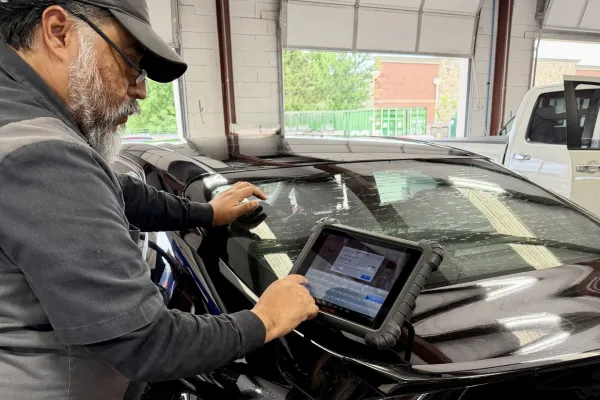
ADAS sensor calibration is the process of telling your car’s cameras, radar, and other sensors exactly where they are in space and how they should interpret the world around them. Using specialized equipment, technicians set reference points and targets in front of and around your vehicle. The ADAS system then “learns” the correct angles and distances so the safety features can react accurately on the road.
Manufacturers and safety experts are clear: any time a sensor is removed, replaced, or potentially moved, even slightly, calibration is required to return the system to its original specifications.
When Does Your Vehicle Need ADAS Calibration?
After any front or rear collision, even at low speeds, that affects the bumper, grille, or liftgate.
When a bumper cover, radar bracket, or camera mount is replaced or adjusted during collision repair.
After windshield replacement on vehicles with camera-based lane-keep or forward collision systems.
Following suspension or alignment work that changes ride height or wheel angles.
💡 Pro Tip: If your dashboard warning lights came on after a collision, bumper repair, or windshield replacement, ask specifically whether ADAS calibration was performed, not just a basic scan or reset.
Static vs. Dynamic Calibration: Why the Right Environment Matters
Depending on your vehicle, calibration may be static, dynamic, or a combination of both:
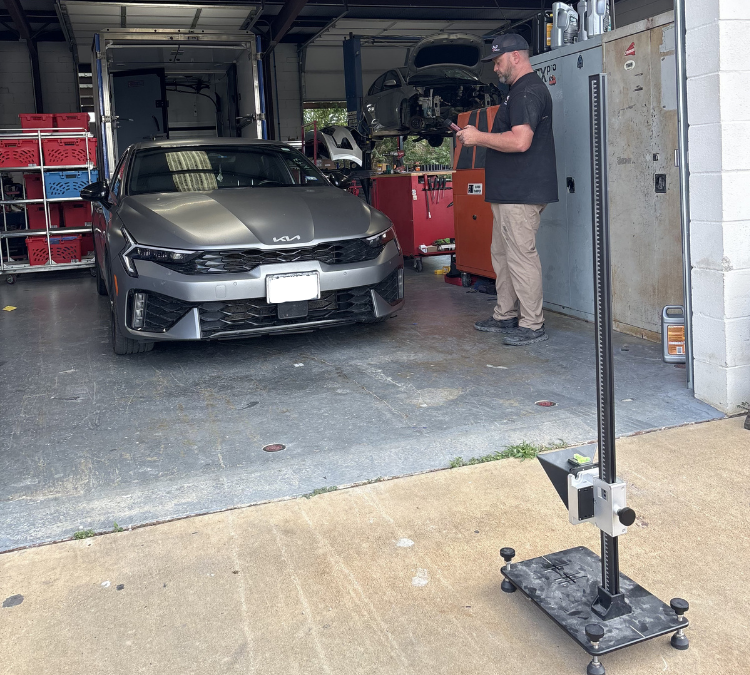
Static calibration is done in the shop, with the vehicle parked. Technicians set up large, highly specific targets and measurement tools at precise distances and heights. The vehicle’s computer then adjusts the sensors to match those known references.
Dynamic calibration is performed during a controlled test drive. The system fine-tunes itself while the car is driven at set speeds on roads with clear lane markings and predictable traffic patterns.
In both cases, the process requires specialized equipment, up-to-date software, and technicians trained specifically for high-tech safety systems. This is not a “guess and check” task, it’s a precise, documented procedure that brings your vehicle back to manufacturer standards.
Why In-House ADAS Calibration at B&D Collision Matters
The Problem With Shipping Your Vehicle Out
Many collision repair shops don’t have the tools, space, or training to perform ADAS calibration themselves. Instead, they complete the cosmetic and structural work and then send your vehicle to a dealership or third-party facility for calibration. That can create several issues for you as the vehicle owner:
Delays: Your car sits in line at another facility, waiting for an open slot in their schedule, which can add days to your repair time.
Communication gaps: If something doesn’t pass calibration, the vehicle may need to go back to the body shop, creating back-and-forth trips and more waiting.
Inconsistent documentation: You may not receive a clear, unified record of what was repaired, what was calibrated, and how it was verified.
B&D Collision’s Competitive Edge: Certified In-House ADAS Calibration
B&D Collision takes a different approach. Instead of relying on outside vendors, B&D has invested in certified in-house ADAS calibration capabilities. That means your vehicle’s collision repair and its digital safety calibration are handled under one roof, by one coordinated team.
Faster turnaround: No waiting for outside appointments or extra transport. Calibration is built right into your repair plan and schedule.
Better quality control: If a sensor doesn’t pass calibration on the first attempt, the same team that performed the collision repair can inspect and correct any underlying issues immediately.
Comprehensive documentation: You receive a clear record of structural repairs, digital frame measurements, and ADAS calibration results, giving you confidence that your vehicle is truly ready for the road.
📌 Key Takeaway: With B&D Collision, your vehicle doesn’t bounce between multiple shops. One expert team oversees the entire process, from visible collision repair to invisible safety calibration.
I-CAR Gold Class: What It Means for Your Safety Systems
B&D Collision is proud to be an elite I-CAR Gold Class facility. That designation is earned by only a small percentage of collision repair centers nationwide and signals a deep commitment to ongoing training and up-to-date repair knowledge.
Technicians are fully trained and certified in the latest repair techniques, materials, and safety systems, not just traditional bodywork.
Training includes high-tech ADAS components, digital measuring systems, and manufacturer-recommended calibration procedures.
B&D’s team stays current as new 2026 and newer models introduce advanced features like predictive hazard detection, integrated dash cams, and more sophisticated sensor fusion technologies.
For you, that means peace of mind. Your vehicle is being repaired and calibrated by professionals who understand not only how to make it look like new, but how to help it perform like it did before the collision, including all of its advanced safety systems.
Protecting Your Family: Why Calibration Is a Safety Choice, Not a Luxury
Real-World Scenarios Where Calibration Makes the Difference
Imagine you’re driving home at night with your family. A car ahead of you brakes suddenly. If your forward radar sensor was nudged during a minor rear-end collision and never recalibrated, your automatic emergency braking might react a split second too late, or not at all. That tiny delay can be the difference between a close call and a serious crash.
Or picture changing lanes on a busy highway. You glance at your mirror, see no warning light, and start to move over, unaware that your blind-spot sensor is now “looking” slightly too far back or too far forward after a bumper replacement. A vehicle sitting in the true blind spot goes undetected, and a near miss becomes a real impact.
⚠️ Warning: Skipping ADAS calibration after collision repair doesn’t just ignore a dashboard light. It can quietly disable protections you and your family are counting on every day.
Insurance, Documentation, and Long-Term Confidence
More insurers and manufacturers now require documented ADAS calibration after certain types of repairs. Without that documentation, you may face questions later if another incident occurs or if you sell or trade in the vehicle. Working with a shop like B&D Collision that integrates calibration into every applicable collision repair helps protect you on paper as well as on the road.
Take the Next Step: Schedule Your Digital Frame and Safety Sensor Inspection
If your vehicle has been in any kind of collision, major or minor, or if you’ve recently had bumper, windshield, or suspension work, it’s wise to verify that your safety systems are truly functioning as designed. You shouldn’t have to guess whether your automatic emergency braking, lane assist, adaptive cruise control, or blind-spot monitoring will be there when you need them most.
B&D Collision is here to help. As an elite I-CAR Gold Class facility with certified in-house ADAS calibration, B&D can perform a digital frame and safety sensor inspection to give you a clear picture of your vehicle’s current condition. Their trained team will check for hidden structural shifts, sensor misalignment, and warning codes that may not be obvious from the driver’s seat.
If everything checks out, you’ll drive away with added confidence. If something needs attention, B&D can guide you through the next steps and, when needed, perform both the collision repair and the precise ADAS calibration right in their facility, no extra trips, no added hassle, and no guessing.
Your family’s safety is too important to leave to chance or to treat as a cosmetic detail. Take a moment today to check out the local reviews on our Mesquite collision repair center profile on Google to see why North Texas families trust us with their vehicles. When you are ready, contact B&D Collision and use the calendar on our website to schedule your collision repair appointment. It’s a simple step that helps ensure your vehicle, and every advanced safety feature built into it, is truly ready for the road ahead.


