

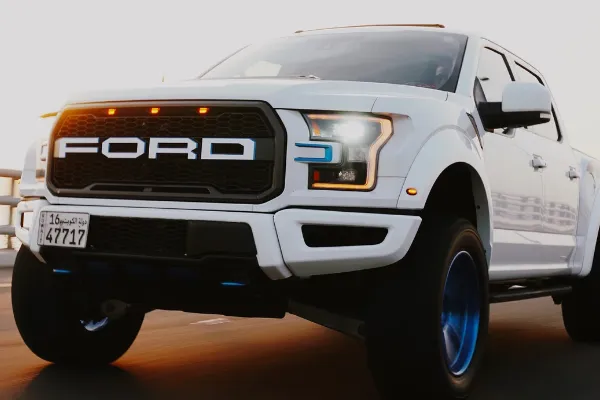
Aluminum Body Repair: Avoid Steel Tool Decay
Collision Repair, Aluminum Body, Mesquite TX
The Truth About Aluminum Body Repair: Why Steel Tools Cause Metal Decay
At B&D Collision in Mesquite, we spend our days thinking about clean workspaces, controlled environments, and avoiding cross contamination between different types of metals. Aluminum auto body repair demands that level of discipline. If you drive a modern Ford F-150 or a luxury SUV with an aluminum body, understanding how aluminum reacts to steel can literally decide whether your truck quietly decays from the inside out or stays safe for years to come. Let’s walk through it in plain English, from the perspective of a collision repair shop that works with this every day.
Why Are So Many Modern Vehicles Built with Aluminum Bodies?
Automakers are under pressure to build vehicles that are stronger, safer, and more fuel efficient. One of the biggest wins has been switching from traditional steel body panels to high strength, military grade aluminum alloys. The 2026 Ford F-150 is a perfect example. Its body panels, doors, and bed use advanced aluminum alloys while a fully boxed high strength steel frame sits underneath for structure and crash performance.
Luxury SUVs and high end crossovers follow the same pattern. Aluminum helps cut hundreds of pounds from the body, which improves the power to weight ratio, towing capacity, and fuel efficiency without sacrificing strength. It also resists traditional red rust much better than bare steel, which is why Ford backs its aluminum body panels with strong corrosion warranties.
Why Does Aluminum Change How Collision Repair Should Be Done?
Here is where the “truth” part comes in. Aluminum is not just lighter steel. It behaves differently under stress, under heat, and especially when it touches other metals. A shop that treats your aluminum F-150 like an old steel pickup is taking shortcuts you will never see. The work might look fine for a while, but hidden problems will surface later, and they are expensive to fix.
How Do Aluminum and Steel React Chemically When They Touch?
Galvanic corrosion is a chemistry problem that shows up as a body shop problem. When two different metals, like aluminum and steel, touch each other in the presence of an electrolyte such as water, road salt, or even humid air, they form a tiny battery. One metal becomes the anode and sacrifices itself, and the other becomes the cathode and is protected.
On the galvanic scale, aluminum is more anodic than steel. That means aluminum will corrode first to protect the steel. So when microscopic steel particles land on an aluminum panel, and moisture gets involved, the aluminum slowly starts to break down around those particles. You will not see it right away, but you will see bubbling paint, pitting, and structural weakening over time.
What Does This Look Like in a Real Collision Repair Scenario?
Imagine a technician grinding on a steel vehicle in the morning and then rolling your aluminum F-150 into the same bay in the afternoon. The air, floor, and tools are now sprinkled with microscopic steel dust. When those particles land on your bare aluminum and the panel later sees rain or road spray, you have just created thousands of mini corrosion cells that work 24/7 to eat away at the aluminum under the paint. It is like injecting bad data into a clean database. You might not notice right away, but the integrity is compromised.
💡 Pro Tip: Any time you see a shop using the same grinders, dollies, or sanding blocks on both steel and aluminum vehicles, that is a red flag for long term galvanic corrosion risk.
Why Does Proper Aluminum Body Repair Need a Clean Room and Dedicated Tools?
What Is an Aluminum Clean Room in a Collision Shop?
In practical terms, think of an aluminum repair bay as a tightly controlled environment. It is an isolated space where only aluminum work is allowed. At B&D Collision in Mesquite, that means a dedicated repair bay with its own dust control, aluminum only equipment, and strict procedures to keep steel away from your vehicle’s bare metal surfaces.
Why Are Aluminum Only Tools So Important?
Any tool that touches steel and then touches aluminum can carry microscopic steel particles. That includes:
Hand tools like hammers, dollies, and body spoons
Power tools like grinders, sanders, and drill bits
Dent pulling equipment and welding accessories
A clean aluminum repair process treats steel contamination like a serious safety risk. You isolate it, you block it, and you never let it into the environment. To put it into a simple checklist, here is a “pseudocode” style overview that mirrors what a quality shop like B&D Collision follows before touching your aluminum vehicle:
def prepare_aluminum_repair(vehicle):
    assert vehicle.body_material == "aluminum"

    clean_room = allocate_isolated_bay()
    tools = get_aluminum_only_tools()

    if has_steel_dust(clean_room):
        deep_clean(clean_room)

    if not tools.tagged_as_aluminum_only:
        raise Exception("Tool contamination risk detected")

    mask_adjacent_panels(vehicle)
    setup_dust_extraction(clean_room)

    return "Environment ready for safe aluminum repair"
That is not real shop software, but it captures the mindset shops like B&D use every day. No cross contamination, no shortcuts, and no “we will just use the same grinder for everything.”
How Do Structural Integrity and Heat Sensitivity Change Aluminum Repair?
What Does It Mean That Aluminum Lacks “Metal Memory”?
With traditional mild steel, you can often bend a panel back and it somewhat “remembers” its original shape. Aluminum does not behave that way. Once it is stretched in a collision, it does not spring back the same. That is why aluminum panels on an F-150 or luxury SUV often require more precise pulling, measuring, and sometimes replacement to restore crash safety performance to factory specifications.
Why Is Heat Such a Big Deal When Welding or Straightening Aluminum?
Aluminum conducts heat very quickly and its strength can drop sharply if it is overheated. In a collision repair setting, that means sloppy welding or uncontrolled heating can quietly weaken key structural areas that are designed to protect you in a crash. To avoid that, quality shops use:
Specialized aluminum dent pulling stations with precise control over pull direction and force
Temperature monitoring tools to keep aluminum within OEM specified limits
Pulse MIG welding equipment tuned for specific aluminum alloys and joint designs
From our perspective as repair professionals, this is like running performance critical systems. You do not just “eyeball” it and hope for the best. You monitor, you follow the data, and you stay within defined thresholds. The same is true for aluminum repair. B&D Collision follows OEM procedures so that when your truck leaves, its structural behavior in a future crash still matches the factory’s engineering, not a guess.
Why Does I-CAR Gold Class Certification Matter for Aluminum Repair?
What Is I-CAR Gold Class and How Does It Protect You?
I-CAR Gold Class is not a marketing badge. It is an industry standard that proves a collision center has trained technicians in all key roles and keeps them current every year. For 2026 renewals, shops must maintain structural, non structural, refinish, and estimating role representatives at ProLevel 2 or higher, plus ongoing annual training (I-CAR). If a shop performs in house ADAS calibrations, they now also need a dedicated ADAS Technician with advanced training.
For you, that means the people repairing your aluminum F-150 or luxury SUV have up to date training on OEM procedures, new materials, and modern safety systems. At B&D Collision, technicians stay on top of these I-CAR requirements so that aluminum repairs are not just “good enough,” but aligned with the latest factory and industry standards for crash safety and structural integrity.
How Does This Tie Back to Real World Safety in North Texas?
North Texas highways are busy, and secondary accidents are a reality. If your aluminum vehicle was repaired without proper training, clean room practices, or OEM procedures, the next collision could behave very differently than engineers intended. An I-CAR Gold Class, faith based, family owned shop like B&D Collision treats your vehicle like a safety system, not just a cosmetic project. The goal is to return it as close as possible to pre accident condition, structurally and visually, with honesty and integrity.
How Can You Make Sure Your Aluminum Vehicle Is Repaired the Right Way?
What Should You Look For in a Mesquite Collision Repair Center?
If you own a Ford F-150, luxury SUV, or any aluminum body vehicle in North Texas, treat your repair decision like choosing a partner for something that protects your family. You want:
A dedicated aluminum repair bay and aluminum only tools
I-CAR Gold Class certification and ongoing training
Written commitment to follow OEM procedures and use proper welding and dent pulling equipment
Strong local reviews and a track record of serving the community with integrity
What Should You Do Next If Your Aluminum Vehicle Needs Collision Repair?
If you are in or around Mesquite, start by checking our local reviews. Read what your neighbors say about their experience, communication, and the quality of repairs. That social proof matters as much as any technical checklist when you are trusting someone with your safety and your vehicle’s value.
When you are ready, reach out to B&D Collision for a factory standard aluminum repair experience. You can call (972) 289-3291 for a free instant estimate, or use the website calendar to schedule an appointment for an in person estimate at a time that works for you. Our team will walk you through the process, coordinate with your insurance company, and make sure your aluminum body vehicle is repaired according to OEM specifications, not shortcuts.
Aluminum brings real benefits to modern trucks and SUVs, but only when it is repaired the right way. With a clean room approach, aluminum only tools, I-CAR Gold Class training, and a faith based, family owned commitment to honesty and excellence, B&D Collision helps protect your investment and your family every time you get back on the road.